



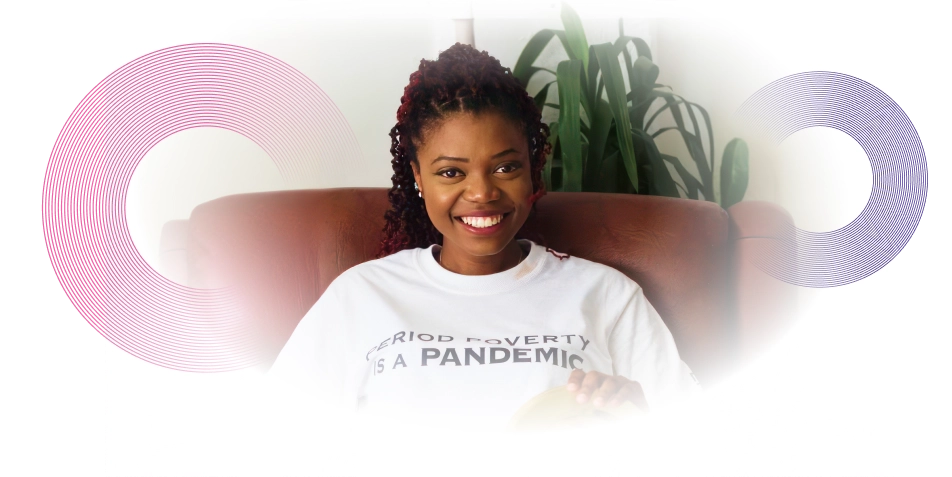
When Yanique Brandford was a child, her mother was determined to keep her daughters in school. She improvised hand-made menstrual products from flexible cardboard covered in plastic and wrapped in crumpled newspaper. These makeshift pads were a practical response to period poverty within her household.
“Growing up in Jamaica, access to essential items like sanitary pads was a luxury for most families in my neighbourhood. Most of what we had went toward food or getting to school. Many of the girls didn’t bother going to school on their period”
When Yanique immigrated to Canada at age 14 and settled in Brampton, she realized that menstrual inequity was not confined to the Caribbean—it was global…..
To establish menstrual equity in Canada and developing countries.
To accelerate menstrual equity through access, empowerment & education that combat stigma and support rights.
Accelerate equitable access to period products for people in need.
Combat stigma and raise awareness of menstrual health and rights.
Enable individuals with dignity, safety and possibility by supporting their health, human rights & well-being.
Addressing the unmet menstrual needs of vulnerable individuals to support their health & well-being.
Fostering community connection and support inclusive of race, culture, and religion; building a healthy community
Dismantling the social contributors to period poverty, including menstrual stigma and shame.
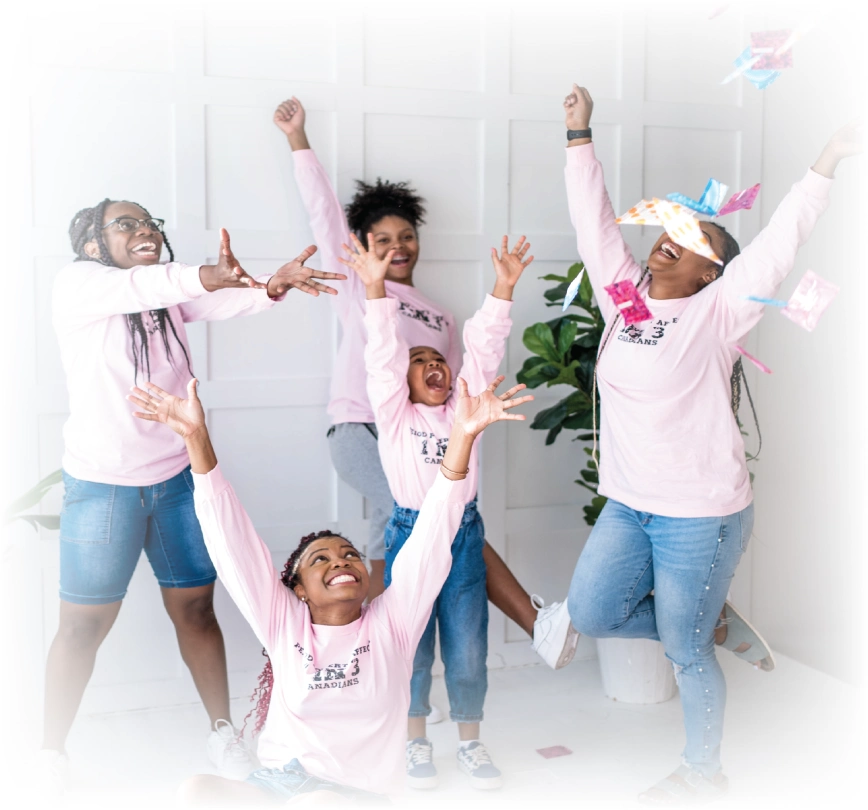
We champion UN goals by empowering girls to break poverty cycles, promoting well-being, encouraging sustainability, and advancing gender equality

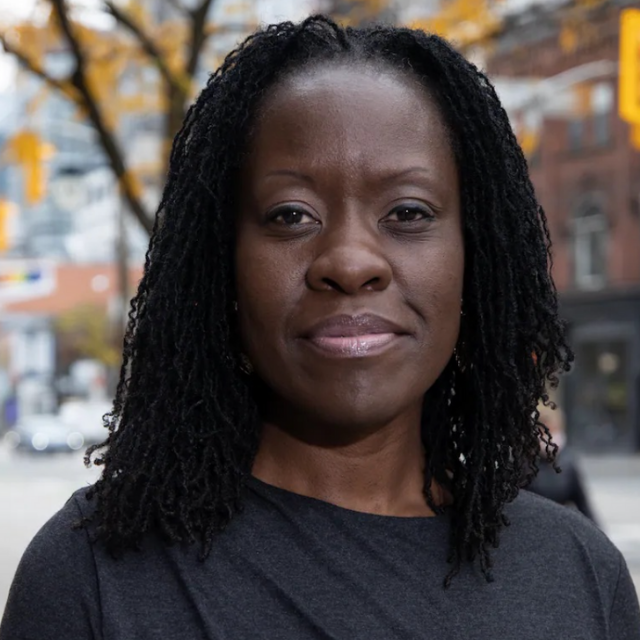
Andria Barrett is a Toronto-born, Brampton-raised Community Advocate with over 20 years of experience volunteering and supporting non-profits.

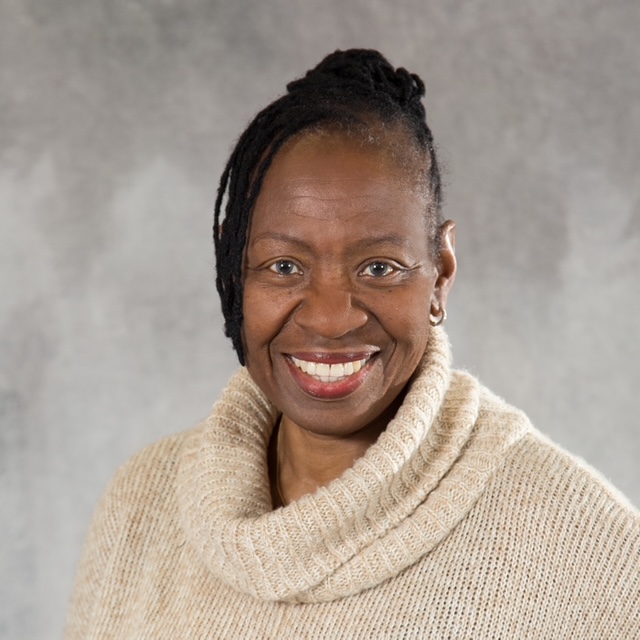
Elaine Forrester was born and raised in Jamaica. At age 11, she immigrated to join her parents in England, where she became a registered practical nurse (RPN) and practiced for three years.
She became an adoption social worker at the Thomas Coram Foundation for Children, before immigrating to Canada in 1989. After relocating to Canada, she was employed by the Catholic Children's Aid Society, where she devoted her time and expertise as a beloved member of the organization for twenty-eight (28) years before retiring in 2017.
As a social worker for over two (2) decades, she has a vast range of experience with families dealing with poverty and victims of physical and sexual abuse, neglect, and many other hardships. When asked about her passion and inspiration, she recalls that her ability to enhance families' lives and being of service to children in need were her greatest motivators. Elaine joined forces with HAGO as a volunteer in 2021. Her intimate understanding of the impact of poverty on the mental and physical health of individuals and families motivates her to work with HAGO to
address these needs.
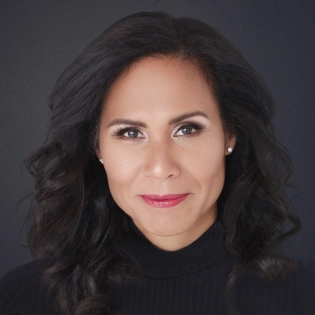
Lyse is a retired faculty member at York University’s School of Translation, where she taught translation practice and theory until 2024.

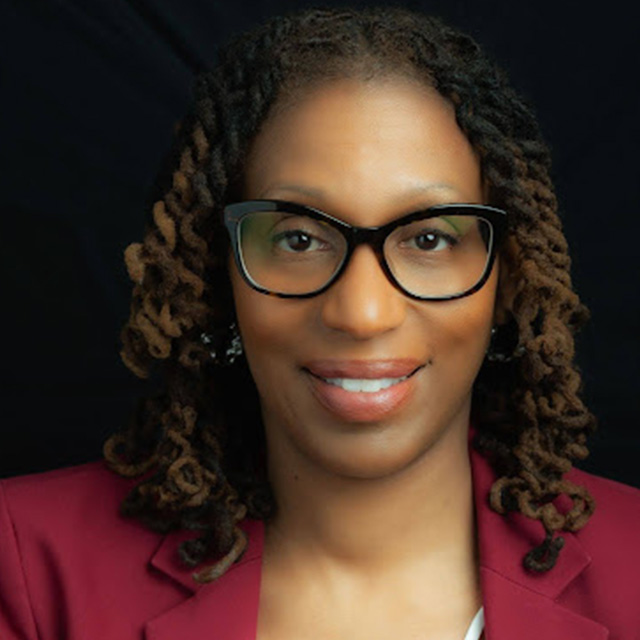
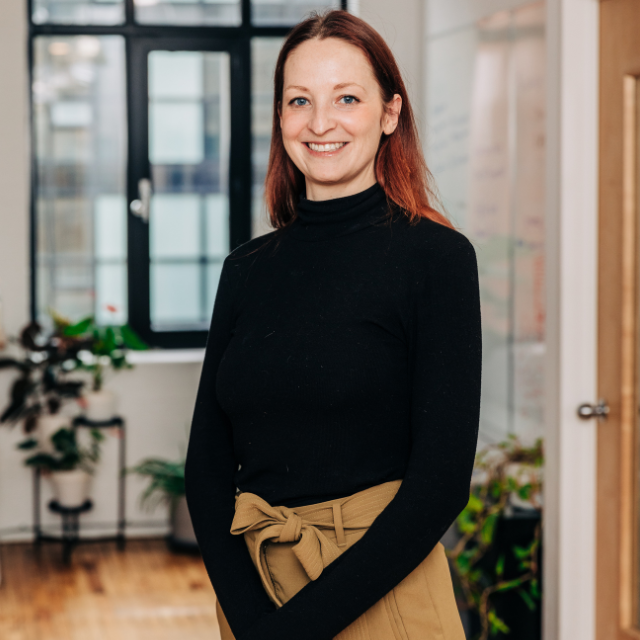
Anne Pringle is a global program and partnership leader with expertise in social impact, gender equity, health.
With a strong background in cross-sector partnerships, advocacy, and capacity-building, Anne has co-founded Local Buttons, an ethical fashion enterprise supporting artisans in Haiti, and managed Toronto Metropolitan University’s SocialVentures Zone, where she developed structured programming for social entrepreneurs. She holds a BA in International Development and an MSc in Environmental Applied Science, bringing a strategic, equity-driven approach to her work.
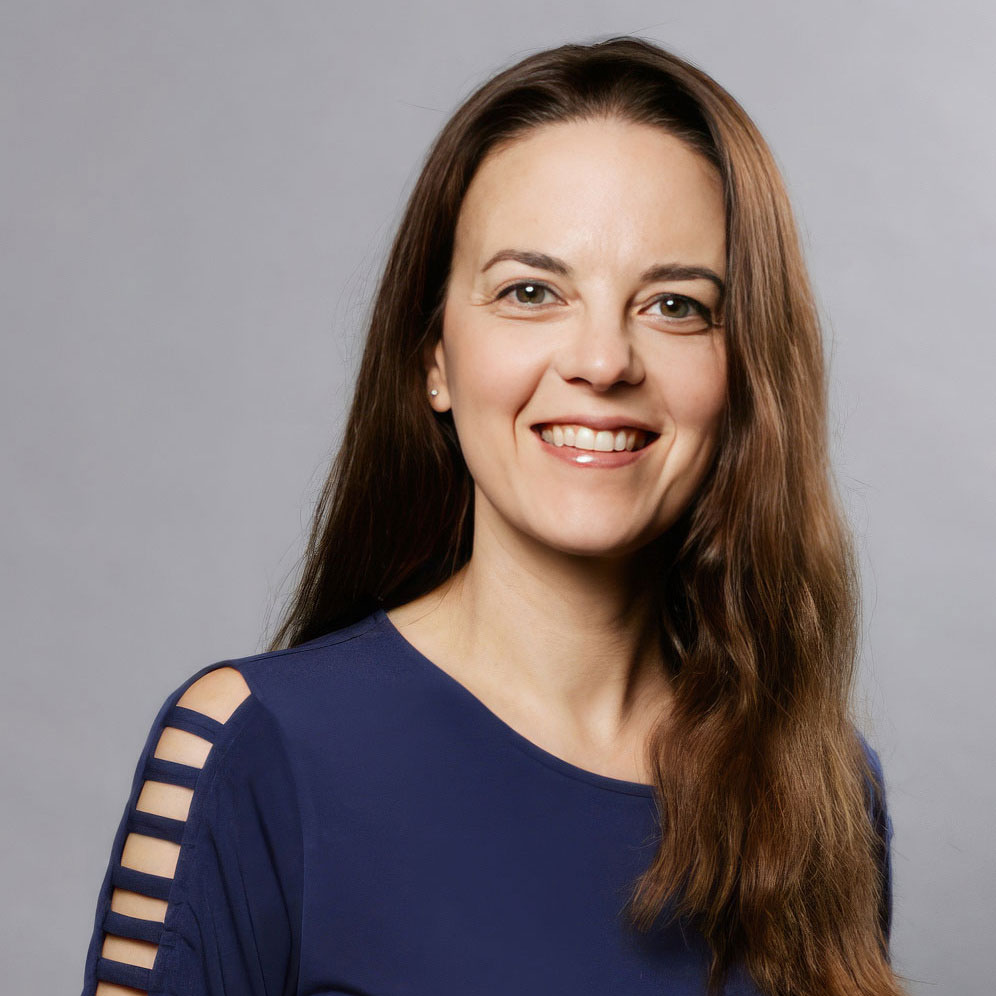
Laurence is a seasoned business leader with 20 years of experience spanning strategy, analytics, product, and project management at top companies such as Capital One, Expedia, and RBC.
Beyond her professional career, Laurence is dedicated to advancing the causes she cares about, particularly empowering women and young girls to thrive. She has been actively involved in mentorship and community initiatives, volunteering with organizations such as Girls E-Mentorship (GEM), Big Brothers Big Sisters (BBBS), and YWCA. Born in Belgium and raised in Canada, she has also lived in the UK and the US, giving her a global perspective that informs both her work and advocacy. She is fluent in English and French and currently lives in Toronto with her husband and two daughters, aged 11 and 8, balancing a fulfilling career with family life and her commitment to making a difference.
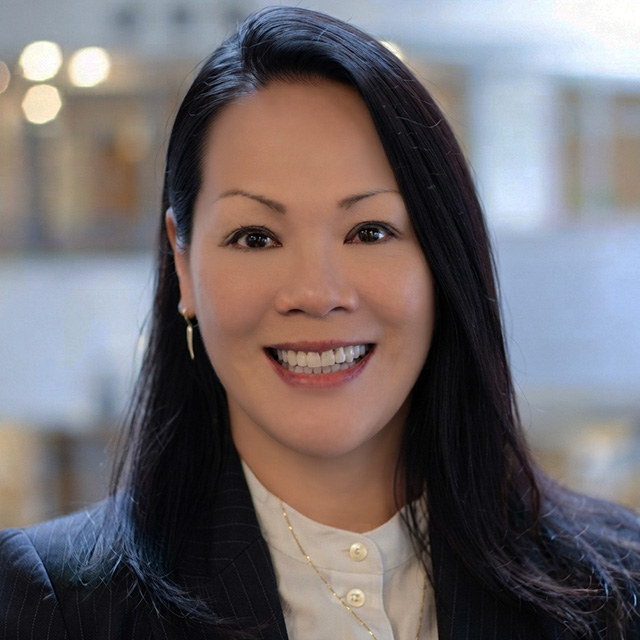
Over 15 years of experience in project management and logistics.
PMP certified, with over 20 years of experience in project management for not-for-profit organizations.
PhD Candidate, Speaker, Educator and Community Services Manager
Lorem ipsum dolor sit amet consectetur adipiscing elit. Dolor sit amet.
Katrina Beatie
Julia Apolot
Judith Jubril
Phylicia Matama Obo
Eden Agulnik
Rebecca Bekele
Shindara Isaac-Oioyse
Melinda Ferguson
Marcia Marcolin
Julia Perera
Prisha Dookie
Home Sewists
Dolores Zezima
Pam Reimer
Avalon Lawrence
Paula David
Patricia Guest
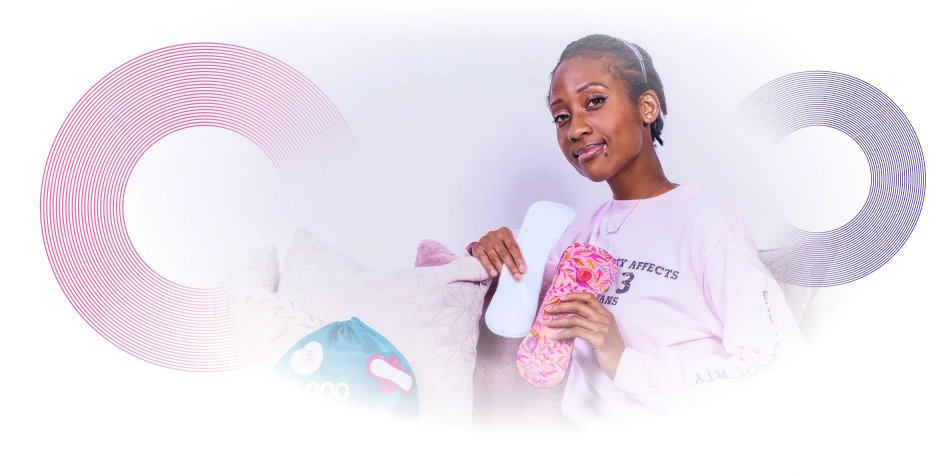
We lead from experience and with care. We have faced period poverty ourselves, and we have heard the stories from the perspective of individuals from various religious, cultural and ethnic backgrounds. We are a people-first organization— we care deeply for those we support.
We’ve built relationships with many who have struggled to afford period products, who’ve been excluded from basic activities, and who’ve faced shame from their families. Help A Girl Out is a resource and community for them. Our team, donors, volunteers, packers, sorters, sewists, and drivers all shape the interconnected network of our organization.
We know where period poverty needs to be fought. We’re already on the front lines, listening, connecting, and caring.
We just need your help fighting it.
© 2026 Help a Girl Out. Powered by APEX Web Studios.
When Yanique Brandford was a child, her mother was determined to keep her daughters in school. She improvised hand-made menstrual products from flexible cardboard covered in plastic and wrapped in crumpled newspaper. These makeshift pads were a practical response to period poverty within her household.
“Growing up in Jamaica, access to essential items like sanitary pads was a luxury for most families in my neighbourhood. Most of what we had went toward food or getting to school. A lot of the girls didn’t bother going to school on their period”
When Yanique immigrated to Canada at age 14 and settled in Brampton, she realized that menstrual inequity was not confined to the Caribbean—it was global. As a high school student, she witnessed the challenges faced by immigrants and low-income families firsthand. Motivated by these lived experiences, she began self-funding donation drives on her credit card before formally founding Help A Girl Out in 2018. She was in her first year of university studying physics.
Since 2018, HAGO has distributed nearly two million hygiene and menstrual products to individuals and community organizations serving refugees, BIPOC communities, and low-income families across more than 350 Canadian cities. Yanique is also passionate about supporting projects in the Caribbean and Africa with sustainable in-kind donations.
In recognition of her advocacy and national impact, Yanique received the 2020 Global Citizen Prize: Canada’s Hero Award, along with several additional local and national honours.
Alongside her humanitarian leadership, Yanique has built a career in STEM. Her MSc research focused on improving medical imaging in proton therapy for cancer treatment. She also has within the nuclear energy sector. With an academic background in Medical Physics/Biomedical Physics from Toronto Metropolitan University, she applies critical thinking and data-driven strategy to both fields reflecting her commitment to advancing both scientific innovation and community well-being.
“Growing up in Jamaica—access to essential materials like sanitary pads was a luxury. Most of what we had we needed to spend making sure we could eat or get to school. By the end of the month, we couldn’t afford sanitary pads. We would use paper, cardboard—and a range of other things to meet our needs. When I got to Canada I realized that this wasn’t tied to geography. It was global—and in Toronto, the need was really there. So I started Help A Girl Out in 2018. Since then we’ve delivered thousands of hygiene materials to women and girls in across Canada, and around the world.”
She is inspired by her mother, who handcrafted pads for her to wear to school so that she could have equal education and escape the poverty that she was exposed to in her home. & uses her experiences and that of her siblings and peers as a driving force behind her passion for Help A Girl Out (HAGO) and eliminating period poverty. Since 2020, HAGO has distributed hundreds of thousands of hygiene and menstrual product kits for the homeless, refugee, BIPOC and low-income communities in the Toronto GTA and beyond as the COVID-19 crisis had severely impacted Canadians, forcing many families below the poverty line and worsening the circumstances of those who were already there.
She was awarded Global Citizen’s Canada’s Hero Award for her advocacy work through Help A Girl Out, the Viola Desmond award bursary by TMU, the Brampton Board of Trade: Community Impact Award & most recently the Toronto Youth Cabinet: Youth Advocay award.
In addition to her humanitarian efforts, Yanique holds a BSc in Medical Physics and is completing her masters in Biomedical Physics at Ryerson/TMU University. Her area of research aims to improve medical imaging in proton therapy cancer therapy.
We firmly believe that the internet should be available and accessible to anyone, and are committed to providing a website that is accessible to the widest possible audience, regardless of circumstance and ability.
To fulfill this, we aim to adhere as strictly as possible to the World Wide Web Consortium’s (W3C) Web Content Accessibility Guidelines 2.1 (WCAG 2.1) at the AA level. These guidelines explain how to make web content accessible to people with a wide array of disabilities. Complying with those guidelines helps us ensure that the website is accessible to all people: blind people, people with motor impairments, visual impairment, cognitive disabilities, and more.
This website utilizes various technologies that are meant to make it as accessible as possible at all times. We utilize an accessibility interface that allows persons with specific disabilities to adjust the website’s UI (user interface) and design it to their personal needs.
Additionally, the website utilizes an AI-based application that runs in the background and optimizes its accessibility level constantly. This application remediates the website’s HTML, adapts Its functionality and behavior for screen-readers used by the blind users, and for keyboard functions used by individuals with motor impairments.
If you’ve found a malfunction or have ideas for improvement, we’ll be happy to hear from you. You can reach out to the website’s operators by using the following email
Our website implements the ARIA attributes (Accessible Rich Internet Applications) technique, alongside various different behavioral changes, to ensure blind users visiting with screen-readers are able to read, comprehend, and enjoy the website’s functions. As soon as a user with a screen-reader enters your site, they immediately receive a prompt to enter the Screen-Reader Profile so they can browse and operate your site effectively. Here’s how our website covers some of the most important screen-reader requirements, alongside console screenshots of code examples:
Screen-reader optimization: we run a background process that learns the website’s components from top to bottom, to ensure ongoing compliance even when updating the website. In this process, we provide screen-readers with meaningful data using the ARIA set of attributes. For example, we provide accurate form labels; descriptions for actionable icons (social media icons, search icons, cart icons, etc.); validation guidance for form inputs; element roles such as buttons, menus, modal dialogues (popups), and others. Additionally, the background process scans all of the website’s images and provides an accurate and meaningful image-object-recognition-based description as an ALT (alternate text) tag for images that are not described. It will also extract texts that are embedded within the image, using an OCR (optical character recognition) technology. To turn on screen-reader adjustments at any time, users need only to press the Alt+1 keyboard combination. Screen-reader users also get automatic announcements to turn the Screen-reader mode on as soon as they enter the website.
These adjustments are compatible with all popular screen readers, including JAWS and NVDA.
Keyboard navigation optimization: The background process also adjusts the website’s HTML, and adds various behaviors using JavaScript code to make the website operable by the keyboard. This includes the ability to navigate the website using the Tab and Shift+Tab keys, operate dropdowns with the arrow keys, close them with Esc, trigger buttons and links using the Enter key, navigate between radio and checkbox elements using the arrow keys, and fill them in with the Spacebar or Enter key.Additionally, keyboard users will find quick-navigation and content-skip menus, available at any time by clicking Alt+1, or as the first elements of the site while navigating with the keyboard. The background process also handles triggered popups by moving the keyboard focus towards them as soon as they appear, and not allow the focus drift outside of it.
Users can also use shortcuts such as “M” (menus), “H” (headings), “F” (forms), “B” (buttons), and “G” (graphics) to jump to specific elements.
We aim to support the widest array of browsers and assistive technologies as possible, so our users can choose the best fitting tools for them, with as few limitations as possible. Therefore, we have worked very hard to be able to support all major systems that comprise over 95% of the user market share including Google Chrome, Mozilla Firefox, Apple Safari, Opera and Microsoft Edge, JAWS and NVDA (screen readers), both for Windows and for MAC users.
Despite our very best efforts to allow anybody to adjust the website to their needs, there may still be pages or sections that are not fully accessible, are in the process of becoming accessible, or are lacking an adequate technological solution to make them accessible. Still, we are continually improving our accessibility, adding, updating and improving its options and features, and developing and adopting new technologies. All this is meant to reach the optimal level of accessibility, following technological advancements. For any assistance, please reach out to