


Menstruation is integral to the lives of approximately 1.8 billion people around the world. Despite a considerable portion of individuals experiencing this, menstrual health concerns remain underrepresented, with poor menstrual literacy making it hard for millions to safely practice menstrual hygiene. In this, advanced yet easy-to-understand School & Youth Programs for menstruating individuals offer a favorable opportunity to combat stigma and taboos associated with menstrual health.
The truth is, misguided social norms have been detrimental to attitudes surrounding menstruation, creating unnecessary shame, stigma, and a plethora of misinformation that adversely affects the lives of those who menstruate. Even in a progressive, economically stable country like Canada, stigma continues to persist, with 25% of the population agreeing that periods are ‘dirty’ and ‘unclean’, and an additional 20% expressing disapproval for public discussion. It only gets more difficult to identify, address, and/ or treat problems associated with menstruation with a lack of open conversations about it. Consequences for not having access to menstrual hygiene management (MHM) may occur in the form of inability to perform well at school; anxiety and depression; social isolation; infections (bacterial vaginosis and UTIs), and various menstrual health issues going unchecked, including abnormal uterine bleeding, PCOS/PMOS, endometriosis, amenorrhea, dysmenorrhea, PMDD, and uterine fibroids.
Considering the impact of a simple lack of information, it’s important to introduce evidence-backed, easy-to-understand, medically informed knowledge about periods to menstruating individuals from a young age. International researchers agree that getting a better grip on the subject of menstruation brings the overall menstruating community ‘a step closer’ to personalized care. In efforts to achieve comprehensive healthcare and body literacy, menstrual education plays a crucial role. the ideal curriculum in schools should encompass topics of core biology, menstrual cycles, inclusivity of genders, how to distinguish between normal pain and abnormal pain, nature and recognition of prospective underlying condition(s), information to seek timely help, safe menstrual products to use, menstrual equity, destigmatization of periods, ways to lead a confident life while managing menses, and how to improve menstrual literacy in society.
Why Menstrual Health Education Matters in Schools
Schools are the primary settings in which young minds are given the chance to learn, practice, and adapt to new information. Students spend a large proportion of their time in education, often accepting what they learn in the classroom as correct. Yet, students who haven’t reached puberty often remain unaware of some of the physiological changes their bodies are set to experience in life. While the mean age of menarche (first period) is 12.9 years in Canada (based on data from the 1930s-2000s), many menstruating individuals are starting their periods earlier and express discomfort upon getting their first period due to educational gaps, with a few even reporting feeling ‘scared’ (as per data available on an international study).
But that’s the point of teaching the fundamentals of menstrual health education in schools. A systemic delay in delivering appropriate information to individuals expected to menstruate upon reaching puberty can result in stirring feelings of fear and anxiety in young minds who are just beginning to experience life. Among other factors, a lack of proper menstrual education can also hurt student attendance, with 77% of Canadians agreeing that menstruation affects activities like going to school (along with reporting to work and taking care of families), and 25% of Canadians admitting personal experience of missing school during menstruation.
Modern approaches to improving health literacy stress the need to properly learn about the menstrual cycle, menstrual dysfunctions, and everything that surrounds it. Given the rise of misinformation and confusion concerning menstruation among the masses, it has become imperative to also integrate factual menstrual health education into school curricula. It also calls for creating inclusive learning environments where those experiencing menstruation can share space with those who don’t experience it; challenging deep-rooted social stigma with acceptance. Canadian schools may start introducing the fundamental concepts of menstrual health from lower year levels and work their way up as the students progress to the next grade. Not only do such School & Youth Programs help dismantle harmful taboos associated with menstruation, but they also support student well-being while fostering equitable learning environments. And building menstrual literacy begins with understanding how menstruation actually works.
Understanding Menstruation | The Foundation of Menstrual Health Education
Deconstructing taboos associated with menstruation isn’t easy. It demands a thorough understanding of what you’re fighting for. How do periods occur? Why do periods occur? What role does menstruation play in regulating the overall health of an individual?… From an oversight, these questions wouldn’t seem that important. But in reality, developing a good understanding of menstruation through such questions is integral to strengthening the foundation of menstrual health education. To start with, normal menstruation refers to the cyclic bleeding occurring from the uterine corpus between the time periods of menarche and menopause (in other words, the onset and complete stop of monthly vaginal bleeding). In this, the ‘normalcy’ of menstruation can be described with four distinct domains, including: frequency, regularity, duration, and volume. However, it’s important to consider that not every menstruating individual experiences normal menstrual bleeding, with up to 30% reporting alterations in the volume or pattern of menstrual blood flow.
As for why menstruation occurs every month (in every 24 to 38 days), there’s a simple reason: preparation. It is a biological process that prepares the body for a potential pregnancy. But regardless of whether a pregnancy occurs, the menstrual cycle impacts one’s physical, mental, and emotional well-being. While the uterine lining only sheds during the menstrual phase of the cycle (roughly 5-7 days), the other phases (follicular, ovulation, and luteal) also shape other aspects of one’s health. In this, hormones such as estrogen, progesterone, follicle-stimulating hormone (FSH), and luteinizing hormone (LH) control (1) when an egg matures, (2) when ovulation occurs, (3) whether the uterine lining sheds, while also (4) building up the uterine lining, (5) affecting body temperature, and (6) regulating mood and energy levels. Together, these hormonal fluctuations allow the menstrual cycle to repeat in a predictable pattern throughout a menstruating individual’s reproductive years.
Fluctuations in hormones throughout the menstrual cycle can help explain how the human body is affected. Notice the sharper focus, higher confidence levels, and improved mood during follicular and ovulatory phases? That’s the work of your rising estrogen levels, which support brain function and stimulate the release of mood-regulating neurotransmitters (such as serotonin and dopamine). In contrast, the irritability, sadness, anxiety, mood swings, fatigue, and difficulty concentrating that occur in days leading up to or during periods are associated with the sharp decline in estrogen and progesterone. When it comes to physical symptoms, hormonal shifts tend to cause abdominal cramps, bloating, breast tenderness, headaches, sleep disturbances, and changes in appetite. Although such changes are considered a normal part of the menstrual cycle, their type and severity vary considerably from one menstruating individual to another.
Because menstruation affects much more than monthly bleeding, every student should receive accurate, age-appropriate menstrual health education before puberty. Schools are encouraged to introduce the concept of menstruation (both normal and abnormal menstrual patterns) to both affected and unaffected audiences, using correct anatomical terms to build menstrual health literacy and enhance comfort for those experiencing it. Considering how euphemisms (polite terms) in regular discourse are likely a result of shame and embarrassment associated with menstruation, it’s also suggested to normalize the use of menstrual health terms within school settings to help fight hidden taboos, gain adequate literacy to take action (in case of abnormal flow), and increase confidence for people who menstruate. In retrospect, timely education may help individuals stay informed about symptoms like pain, dysmenorrhea, anxiety, depression, and fatigue to seek early diagnosis for prevalent reproductive health issues, including endometriosis, premenstrual syndrome (PMS), and premenstrual dysphoric disorder (PMDD). Ultimately, improving menstrual health literacy empowers individuals to make informed decisions about their reproductive health while fostering empathy, reducing stigma, and creating more supportive learning environments for everyone.
Importance of Teaching Menstrual Hygiene
Managing menstruation effectively doesn’t just concern using the right products to absorb menstrual blood. Rather, it’s also about practicing menstrual hygiene, which aids in achieving a good state of health; one that’s free from infections and odors, while ensuring comfort during the days of menstruation. Lack of upgrades and maintenance to the school may create hindrances (through bullying, lack of privacy, or inadequate toilet facilities) for menstruating students to practice menstrual hygiene. For example, a student wishes to go to the restroom to change their sanitary napkin or tampon, but finds the door has no functional lock system (putting their privacy and right to safe, dignified menstrual hygiene in jeopardy). Another example is students from low-income families. They may not be able to afford disposable, safe period products at home, but a lack of period product dispensers at schools continues to marginalize them, which forces them to resort to unsafe period management tools (such as the use of rags or paper).
For reasons such as these, it’s crucial for School & Youth Programs to introduce basic concepts of menstrual hygiene through their workshops or advocacy campaigns. The efforts to educate the youth about menstrual hygiene help remove the shame and embarrassment associated with changes tied to puberty for those who menstruate. Despite being a developed country, the prevalence of shame is also found to be reflected in the attitudes of 11% of Canadian individuals who menstruate, according to a 2023 study. Additionally, 25% of menstruators reported missing school (as indicated by the same study), with primary concern being a fear of leakage. In light of this, normalizing discourse of periods, related concepts and/or terms; installing dispensers for menstrual essentials; teaching sustainable and safe methods to manage periods; and providing clear, factual information can help combat period poverty and subsequently, encourage students to show up to their classes during their days of menstruation.
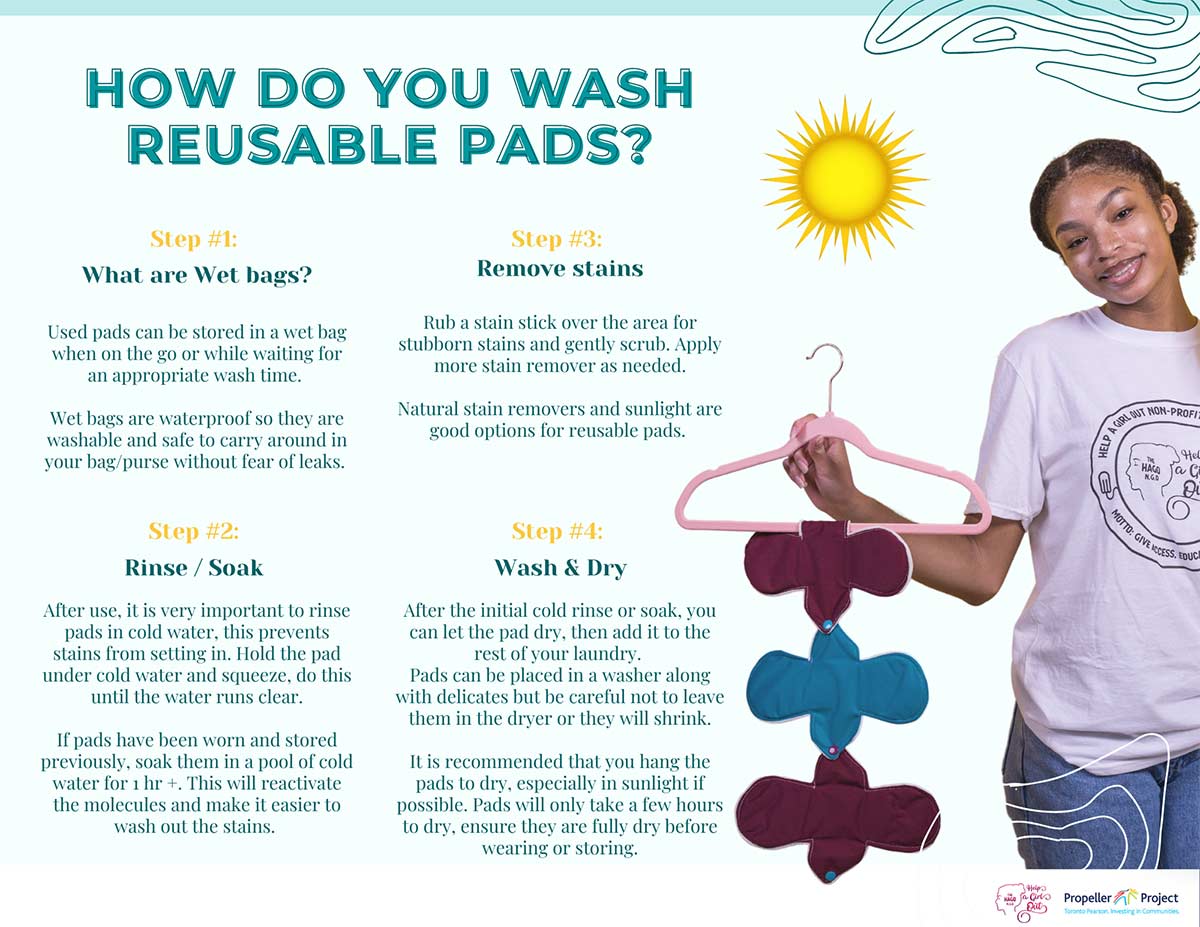
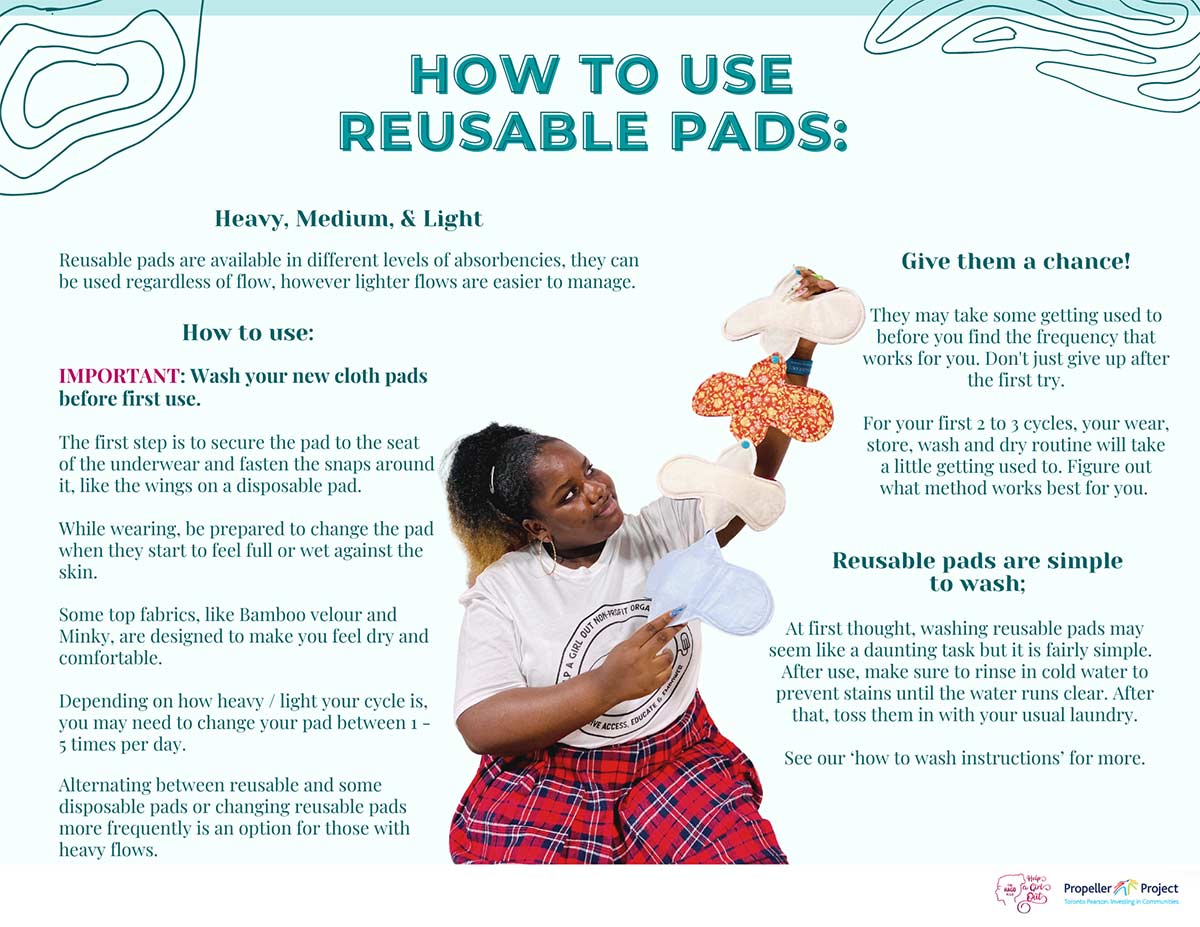
Through School & Youth Programs, students will be able to learn the fundamentals and relevance of menstrual products, safe product use, and personal hygiene during menstruation. It’s in their best interest if they know their options when it comes to effective period management. While menstruating individuals’ primary goal would be to contain period blood, their preferences for period products are also affected by their comfort levels. Ideally, the lessons should encompass the descriptions, uses, safety guidelines, and benefits of menstrual products such as: disposable and organic pads, panty liners, and tampons; menstrual cups and discs; period underwears; and reusable cloth pads. The comfort level of students, either with external period management options (those worn outside the vagina) or the ones placed for menstrual blood collection/absorption within the vagina, can be aligned with destigmatizing information to help them make informed choices that better suit their needs.
Following that, students need to be informed about personal hygiene during menstruation. While using ‘feminine washes’ has become a common practice for menstruating individuals, it’s vital to emphasize the damage such washes, harsh soaps, douches, and scented sprays can do to their genital area. The vaginal area relies on healthy, protective lactobacilli bacteria to maintain an acidic environment that repels harmful microbes. But using chemical-infused ‘hygiene’ options washes away the protective agents, which disrupts the microbiome, alters natural acidic pH levels, and inflames delicate tissues. Later on, the damage can progress into painful infections and/or cause odor. Well-planned School & Youth Programs help students understand that a simple wash with warm water (during the daily bathing routine) is an optimal practice to clean their genital area. Paired with this practice, knowledge of safe product use helps keep students safe from serious medical risks, such as Toxic Shock Syndrome, bacterial growth, and yeast infections.
How Puberty Education Supports Menstrual Health Learning
Widening hips, rapid increases in weight and height, breast development, and body hair growth are physical changes that often go unnoticed by students entering puberty when there’s a lack of education about it. While children are usually bright for their age, such ‘unannounced’ body changes make them feel confused and render them clueless about the ‘next’ step. They remain unaware of using bras for comfort or developing hair removal habits (among others) to practice safe menstrual hygiene. Standard school health education is not observed to provide accurate and detailed education concerning puberty and menstruation management (according to an international study). On the other hand, advanced School & Youth Programs utilize puberty education to better support menstrual health learning, which is also a core component of physical changes associated with puberty. It all starts with students grasping information about the biological, emotional, and social changes expected during puberty, including physical maturation, reproductive anatomy, and emotional regulation. In this context, puberty education provides crucial information on biological facts, practical hygiene management, and stigma reduction that collectively support menstrual health learning.
Besides the physical changes individuals are subjected to during puberty years, there are emotional and psychological changes that also demand attention. Irritability, anxiousness, sadness, and a lack of total awareness concerning emotional outbursts are some common examples of mood swings that menstruating individuals would likely experience in this time period. Interestingly, even 49% of Canadian individuals who are well into their menstruating years admit not being able to control their emotions during menstruation. The physiological changes during puberty years cause the brain to become highly sensitive to social feedback, causing young menstruating individuals to isolate themselves, become self-conscious, and worry extensively about external validation. School & Youth Programs help students lead lives with confidence, preparing and enabling them to better manage what they’re expected to experience, while also avoiding unexplained feelings of ‘shame’ or ‘embarrassment’ associated with it. While helping students gain awareness about their natural body changes, such programs also shed light upon how parents belonging to previous generations also tend to dismiss their child’s behavior in their teen years as ‘just a phase’. This practice fails to acknowledge that puberty actually messes with their child’s estrogen and progesterone levels, leading them to feel opposing emotional extremes within the matter of a few minutes.
For this reason, the delivery of crucial puberty education and menstrual health learning through School & Youth Programs helps improve visibility of struggles that uninformed menstruators have been unable to avoid during their time. Subsequently, their approach also makes the natural experience more manageable for current and upcoming generations. For example, students learn to recognize early bodily signals for puberty, including normal vaginal discharge and breast budding. Other than that, practical instructions are also provided to make it easier for students to (1) track their cycle, (2) handle unexpected period bleeding instances, and (3) ask trusted adults for menstrual essentials. Through such workshops, factual information shared in safe classroom environments helps students view menstruation as a normal, healthy biological function and not something to fear or feel ashamed of. Such learning helps young minds mentally prepare for body changes while empowering them to overcome anxiety and feel confident.
Teaching Students About Menstrual Stigma and Social Attitudes
Educating individuals who are in attendance for the sole purpose of learning is always productive. While School & Youth Programs provide students with crucial information and practices needed to safely manage menstruation, they also educate students to address the stigmas that hide in plain sight. By definition, menstrual stigma is the negative attitude, shame, and taboo tied to periods. Whether it’s the urgency to hide a period stain on pants/skirt, the unexplained need to carry menstrual products in opaque packaging, or even the hesitance to openly discuss aspects relating to periods (such as vaginal itching, cramps, or mood swings), these are all examples of menstrual stigmas prevalent in society. If one comes to assess the causes leading to menstrual stigma, they’ll find one common thing: shame.
The embarrassment is exacerbated by the idea that period blood is dirty and unclean; something that 1 in 4 Canadians agree upon. Some days, the shame shows up in the usual ‘Aunt Flo’ euphemism; on other days, it reflects in the unwillingness to share painful menstrual health concerns with HR (for the purpose of seeking relief via breaks or leaves). Unfortunately, this societal attitude creates a culture of secrecy within a school environment where menstruating students feel compelled to hide anything remotely relating to their natural biology, which negatively impacts the students’ ability to engage and participate in school. It has been recorded that students believe menstruation is a negative, stressful, and concealed experience at school, associating words like ‘embarrassing’, ‘suffering’, ‘inconvenience’, and ‘annoying’ with it. Contributing factors for such experiences are the barriers menstruating students frequently face within school premises, common examples of which include: inadequate toilets, water, and disposal management; insufficient guidance for period management; and a lack of effective menstrual products.
Proactive School & Youth Programs help counteract these negative impacts by fostering respectful, mixed environments, where open conversations about menstruation are held to educate individuals, regardless of whether or not they menstruate. This idea is supported by a study exclusively advocating for inclusive menstrual health literacy, requesting school support for developing an open culture that normalizes conversations about menstruation amongst all individuals. As the workshops fulfilling such agendas end, they expand participants’ minds, resulting in either informed allies or menstruating individuals who are better equipped to handle their period.
Role of Schools in Supporting Menstrual Equity
Menstrual equity refers to equal and comprehensive access to menstrual products and education, which counters menstruating individuals’ inability to afford or access menstrual products, education, hygiene facilities, and waste management. To counter this, organizations like Help A Girl Out are actively working through School & Youth Programs with educated instructors, an enthusiastic team of volunteers, infographics, donations, and supply kits. But none of these programs would exist without support from schools themselves. Schools are encouraged to play their part in making accessibility to menstrual products as easy as possible for students. Subjectively, the ‘importance’ of menstrual products can be compared to that of toilet paper, soap, or paper towels in the restroom.
More than a choice, menstrual products are a necessity for all students who menstruate. Individuals who lack financial resources to afford menstrual products tend to practice unsafe menstrual hygiene norms (including extended use of disposables or using makeshift alternatives for absorbing period blood). In line with federal and provincial initiatives in Canada, a fraction of schools are mandated to provide free, high-quality, and comfortable menstrual products (such as pads and tampons) to students in washrooms on school premises. If practiced throughout the country, this move would be well supported with a supply of emergency clothing items (such as spare pants and underwear), helping achieve menstrual equity. Altogether, these efforts also reduce the likelihood of students contracting dangerous infections, toxic shock syndrome, and bacterial vaginosis; which would otherwise be caused through unsafe menstrual hygiene practices.
Another proposition that backs what menstruating students need within schools is inclusivity. Regardless of which gender a student chooses to identify with, installation of dispensing machines should be integral to all gender-specific washrooms. This practice would ensure that trans, non-binary, or other gender-identifying students can access menstrual products safely without facing any distress or discrimination of sorts. To protect and enable the students’ right to safe and dignified menstrual hygiene, schools must consider establishing robust policies. This involves updating the school’s infrastructure to introduce private, clean washroom stalls, where each cubicle is equipped with (1) a designated disposal bin, (2) functional locks, and (3) nearby access to sinks.
At the same time, such policies should also include frameworks that protect students from discrimination and abolish academic penalties related to menstruation. These penalties include grade deductions, which are often a result of menstruating individuals experiencing severe cramps, heavy bleeding, brain fog, or flare-ups, leading them to either miss school or be less attentive in class. Instead of sidelining such menstrual health issues, school policies should offer flexibilities that support student attendance as a valid reason for absences, lack of attentiveness, or delays in submissions. In addition, schools should pay careful attention to staff training, as it is a vital component of such policies. Educators and administrators must be trained in menstrual equity so they can respond to students’ needs appropriately, with empathy, discretion, and flexibility.
What Makes a Strong School Menstrual Health Program?
Anyone can come on a platform, speak about a topic, advocate for a prevalent issue, and provide solutions for it. But does it always mean the information they share is accurate? A considerable population doubts that. Due to the lack of reliable information, many menstruating individuals remain vulnerable to period poverty. In this regard, School & Youth Programs for menstrual health act as vital tools to improve awareness, teach safe product use, and counter stigmas associated with menstruation. For this reason, such programs must be comprehensive, evidence-based, inclusive, student-centered, and community-engaged to ensure effective content delivery and lasting impact.
To start with, the foundation of such programs must rely on accurate, evidence-based information. This means that any claim or suggestion shouldn’t be based on hearsay information. Rather, it demands the delivery of scientifically accurate facts concerning anatomy, endocrinology, and the menstrual cycle. Students who are yet to hit puberty should understand the basics of menstruation, with the complexity of information increasing as they progress to the next year level. In this manner, they’ll be able to grasp the biological phases of menstruation, what constitutes a normal cycle, and ways to identify signs of menstrual disorders. In addition, medical accuracy and region-wise, up-to-date statistics help demystify the bodily process, dismantle harmful cultural myths, and empower students to know when the right time is to seek professional help through medical intervention.
Beyond scientifically backed information, there is also the factor of targeted language usage. No message or teaching can have a lasting impact if there’s an absence of comprehension. For this purpose, easy-to-comprehend language tends to work best with complex concepts associated with menstruation. So when it comes to community change-makers conducting workshops for School & Youth Programs (that aim to improve menstrual health literacy among the masses), inclusive language matters. Whether the information concerns regional language, gender specificity, or distinct environments, it’s imperative for inclusive educational materials to be provided, helping not just women, but also those menstruating individuals who don’t identify explicitly as ‘women’.
For individuals not from Canada who are more comfortable with educational materials in their own language, a comprehensive and engaging curriculum can also be supported with a variety of different languages. To extract an example from our own initiative at Help A Girl Out, we provide resources through our online Equity Library, that are available in six different languages, such as English, French, Hindi, Arabic, Spanish, and Mandarin. Further recommendations can be for upcoming School & Youth Programs, where the language medium is adapted to different formats, such as braille, sign language, or simplified visual aids, which would support students with physical or intellectual disabilities.
Learn How Schools Can Create a More Supportive Environment for Students!
When it comes to improving menstrual health literacy, schools serve as an excellent setting for learning. And where school curricula fall short in providing the right information about health literacy on time, nonprofit organizations like Help A Girl Out step right in.
With our student-centered learning approaches, students don’t just learn how the biological process of menstruation works. Rather, our comprehensive and engaging curriculum for School & Youth Programs equips students with practical life skills, such as recognizing warning signs of menstrual health concerns on time and following correct practices to manage menstrual hygiene with dignity.
Menstrual stigma may persist for some time, but collective efforts can make a big difference. From childhood to adolescence, there are countless changes young minds need to be informed about. So, are you ready to help them replace confusion with confidence? Explore our workshops today.
Frequently Asked Questions (FAQs)
Q1. How can schools promote menstrual hygiene?
Schools may promote menstrual hygiene by either updating their policies to better support menstrual hygiene management within school premises or partnering with nonprofit organizations (like ours at Help A Girl Out) that help implement programs targeting infrastructure, education, and social stigma.
Q2. What grade do they teach about periods?
Schools and nonprofit organizations have slightly different approaches. As individuals expected to menstruate enter puberty between the ages of 8 and 13, basic knowledge about periods may be shared in Canadian classrooms in grade 4 through educators from nonprofit organizations, whereas provincial school curricula may formally introduce menstruation a grade later.
Q3. Why is menstruation education important?
There is a considerable loss of personal, academic, and professional opportunities that come with a lack of menstrual education, making it an essential component of leading a happy and fulfilling life. To help avoid these detrimental effects on various aspects of one’s well-being, Help A Girl Out is working to fill the gaps of stigma, period-influenced absenteeism, and underperformance
Q4. Which infrastructure is essential for menstrual hygiene in school?
Quality menstrual hygiene management demands an infrastructure consisting of free-of-cost menstrual product dispensers; private, fully enclosed toilet cubicles; and functional sinks with water and soap. This enables menstruating individuals to practice menstrual hygiene safely and with dignity.